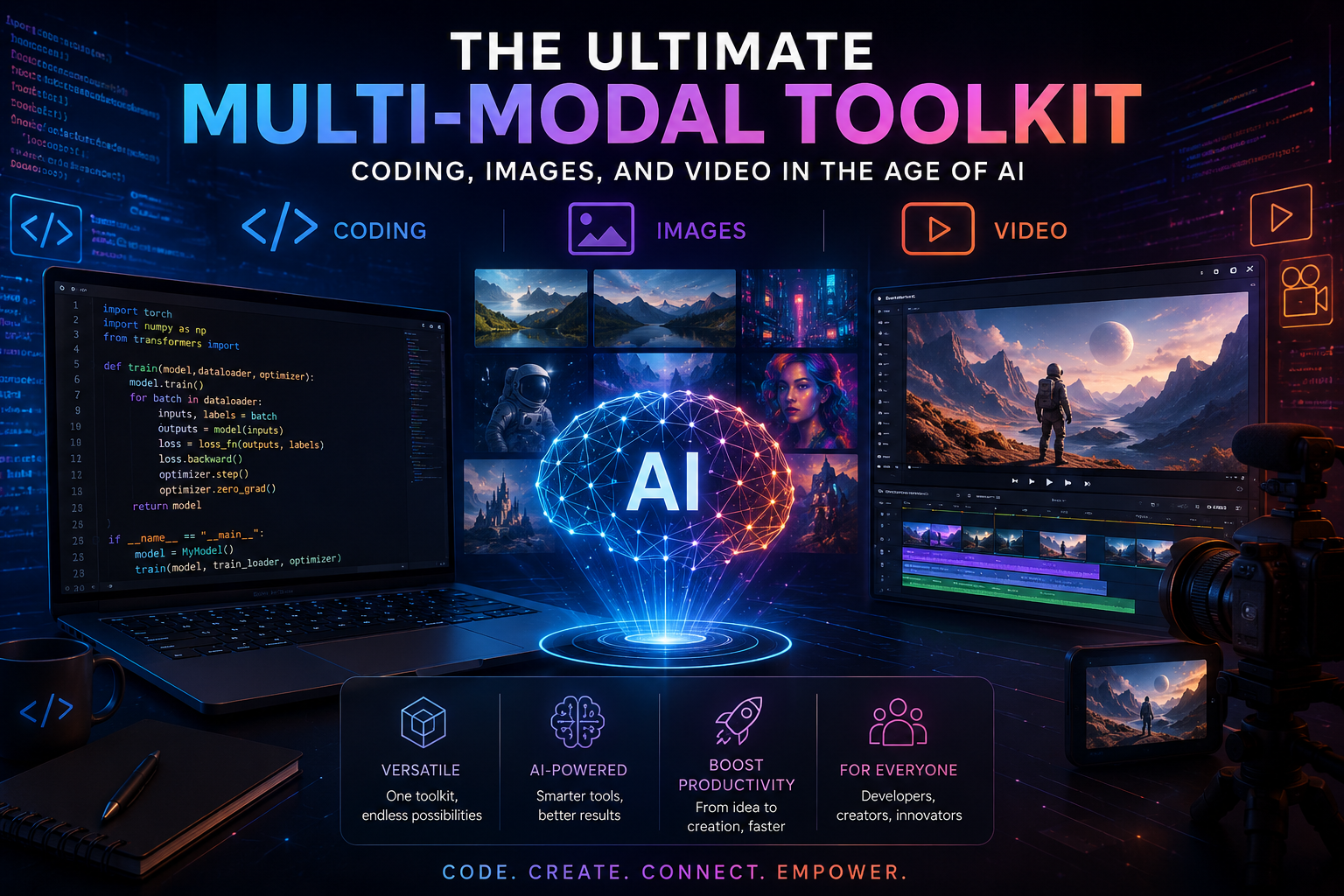
The traditional boundaries between software development, visual design, and video production have completely collapsed. We have officially entered the era of the Multi-Modal Creator—a space where a single individual can leverage specialized artificial intelligence engines to build functional software, design stunning visual assets, and render cinematic video sequences in a fraction of the traditional timeline.
Whether you are looking to scale an online business, build custom software prototypes, or automate a creative workflow, here is how the dominant AI layers stack up across the three pillars of modern digital creation.
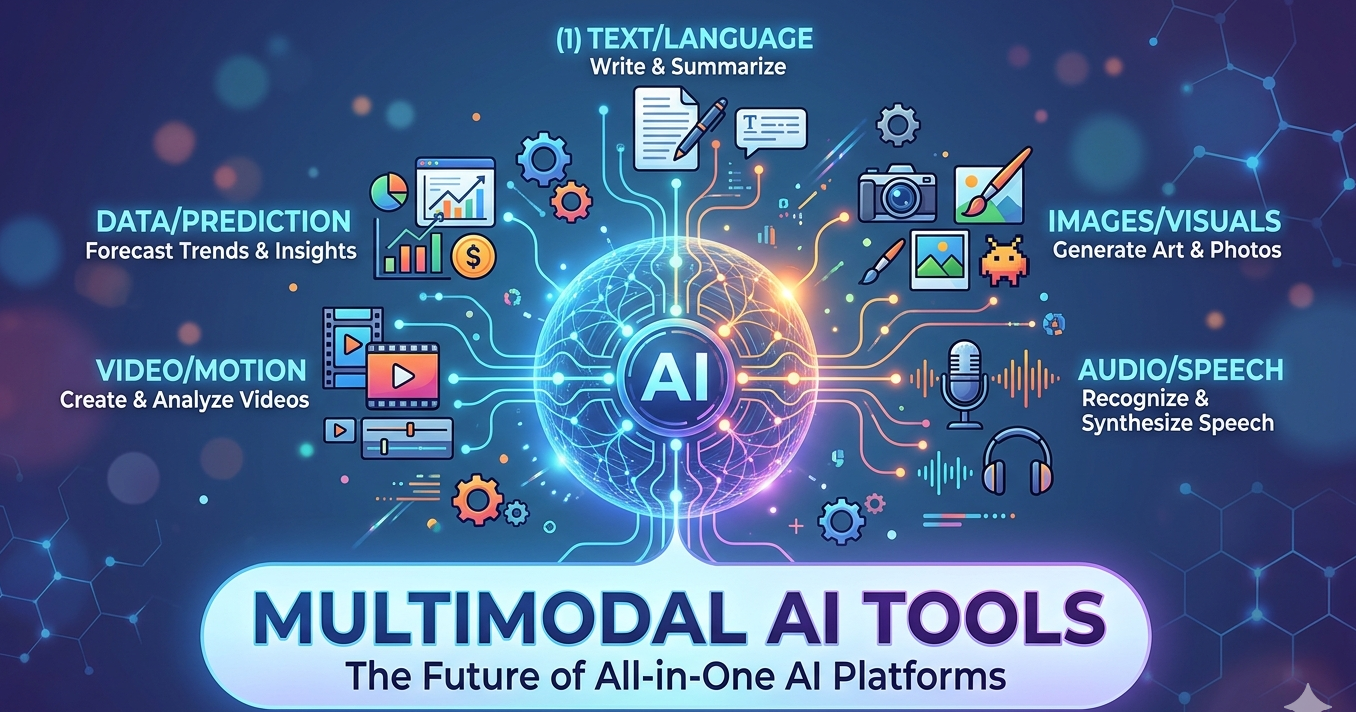
1. AI for Coding: The Silicon Software Engineer
AI coding tools have evolved from simple autocomplete extensions into deep context engines capable of generating full-stack applications, managing systems architecture, and debugging complex runtime errors.
       [ Human Architect ] ──(Natural Language Intent)──► [ AI Code Engine ]
                                                                  │
                                                      ┌───────────┴───────────┐
                                                      ▼                       ▼
                                            [ Logic & Architecture ]   [ Visual Front-End ]
                                            (Clean Code, API Sync)     (Interactive Previews)
The Top Engines
-
Claude (Anthropic): Widely considered the gold standard for pure software engineering and algorithmic logic. Its dedicated Artifacts interface creates an isolated visual window alongside your chat, allowing you to view and interact with real-time code executions, custom websites, or interactive components natively.
-
GitHub Copilot & Cursor: Built directly into the developer environment (IDE). These tools index your entire local codebase, allowing you to refactor legacy code, write automated tests, and map out entire project structures using natural language commands.
The Tactical Edge: Use AI for coding to rapidly prototype micro-SaaS ideas, fix complex API synchronization errors, or automate repetitive web development scripts without getting bogged down in syntax.
2. AI for Image Generation: Commercial-Grade Visual Assets
The days of relying on generic stock photography or spending thousands on basic asset generation are over. Modern image engines offer precise control over style, composition, text rendering, and lighting.
The Top Engines
-
Midjourney: The undisputed champion of cinematic realism, artistic lighting, and hyper-detailed texturing. It is heavily utilized for concept art, website hero images, and premium marketing visuals.
-
DALL-E 3 (via ChatGPT): The strongest tool for pure prompt adherence. If your visual concept requires strict, multi-variable logic or specific text rendered accurately within the graphic, DALL-E 3 interprets the intent seamlessly.
-
Stable Diffusion (FLUX): The power-user choice. Because it is highly adaptable, developers and advanced designers use it on local hardware to build custom-trained image models that strictly maintain brand colors, specific product dimensions, and identical character faces across different scenes.
3. AI for Video Production: Synthesizing Cinema
Video remains the final frontier of multi-modal AI generation. While early iterations produced short, blurry clips, current video architectures deliver stable physics, consistent motion framing, and cinematic resolution.
The Top Engines
-
Runway (Gen-3 Alpha) & Pika: Excellent engines for cinematic b-roll, commercial transitions, and turning static product photography into realistic, moving video loops. They allow for precise camera movement controls—such as horizontal pans, zooms, and custom tracking shots.
-
Sora (OpenAI): The benchmark for complex scene consistency, handling intricate background physics and multi-character tracking across extended cinematic sequences.
-
HeyGen & Synthesia: The choice for business automation. These platforms specialize in hyper-realistic AI avatars. You feed them a script, and the engine generates a polished video of a digital human speaking with natural facial expressions and synchronized voice-cloning inflection.
The Cross-Discipline Pipeline
The real power of this tech stack is realized when you chain these distinct media formats together to form a seamless production loop:
The key to standing out in an automated world is creative curation. The AI engines handle the high-friction, execution-heavy tasks—writing syntax, rendering pixels, and calculating frame-by-frame motion. Your job is to act as the Architect: setting the direction, refining the quality, and directing the tools to build something unique.